

A closer look at Mars
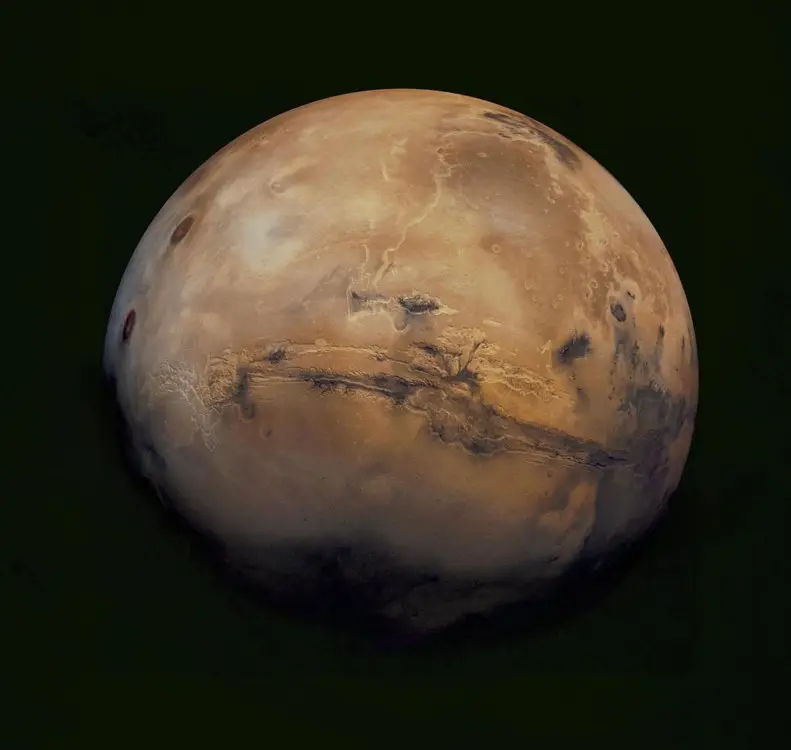
Mars offers surface markings and polar ice caps that can change appearance between observing seasons. Its apparent diameter varies greatly as Earth and Mars follow their different orbits.
A Martian day lasts roughly 24 hours 39 minutes. Observe at the same Earth time on consecutive evenings and the surface features drift slowly in longitude, letting a sequence of sketches cover new ground.
At high power, wait for brief steady intervals and sketch persistent markings. A feature seen again at a similar Martian longitude is more convincing than a fleeting glimpse. The angular size of a distant body determines how much of its surface a telescope can resolve. Two surface markings can blend together when their separation falls below a telescope’s angular resolution.