

LIBRE TELESCOPE
Menu
Book Event

Sky Guide

The March equinox

Quick Stats

Name:
The March equinox
Type:
Event
Observability:
Naked eye
Rarity:
Very common · Every March
Date of last occurrence:
Mar 20, 2026
Date of next occurrence:
Mar 20, 2027
Date of occurrence after that:
Mar 20, 2028
Best telescope for viewing:
Observe without optics. A vertical stick and a fixed mark on level ground let you compare the Sun’s shadow.

Equinox instant · UT date · Calendar reference: November 28, 2026.

How to view The March equinox

  1. Set a local reference

    Try March 19–21, 2027. Set a vertical stick in a level spot with an unobstructed sky.

  2. Measure without looking at the Sun

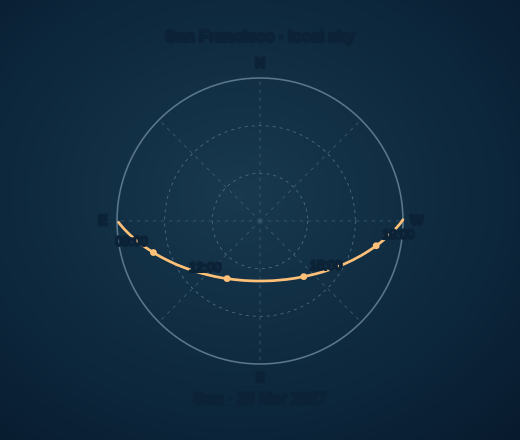
    Near local solar noon, mark the end of the shadow several times. The shortest shadow gives the noon length, which can fall well away from 12:00 on the clock.

  3. Compare neighboring days

    Compare the noon-length measurements on both sides of the equinox. Record whether the shadow gets longer or shorter as the Sun’s seasonal path changes.

A closer look at The March equinox

At the March equinox, the Sun crosses the celestial equator heading north. It marks astronomical spring in the Northern Hemisphere and autumn in the Southern Hemisphere.

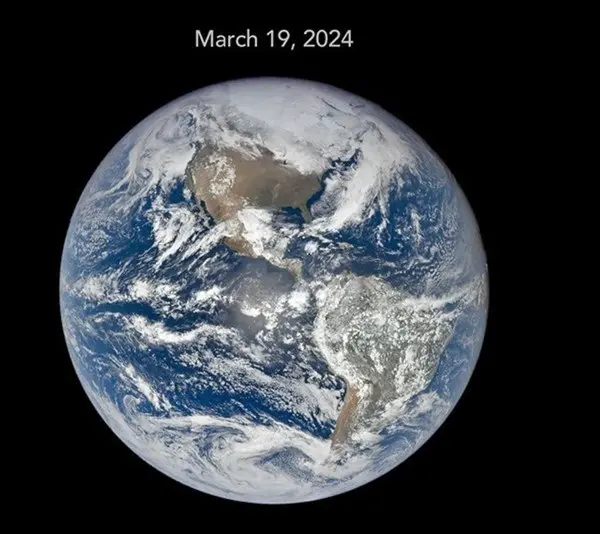
From space, the boundary between daylight and darkness runs close to both poles. Day and night on the ground are approximately equal, with differences from atmospheric refraction and the Sun’s apparent diameter.

Mark where sunrise or sunset occurs relative to buildings or a distant ridge. Repeating the observation a few weeks later makes the seasonal shift along the horizon easy to see.