

LIBRE TELESCOPE
Menu
Book Event

Sky Guide

M34 in Perseus

NGC 1039

Quick Stats

Name:
M34 in Perseus (NGC 1039)
Type:
Object
Observability:
Naked eye
Best telescope for viewing:
Celestron StarSense Explorer DX 102AZ refractor — to keep the central concentration and outliers in one view.

How to view NGC 1039

  1. Plan around meridian passage

    Try November 26–30, 2027. At its highest the field is about 81° above the horizon in Los Angeles and 85° in Seattle. Use your city’s meridian time for the best view.

  2. Find the field

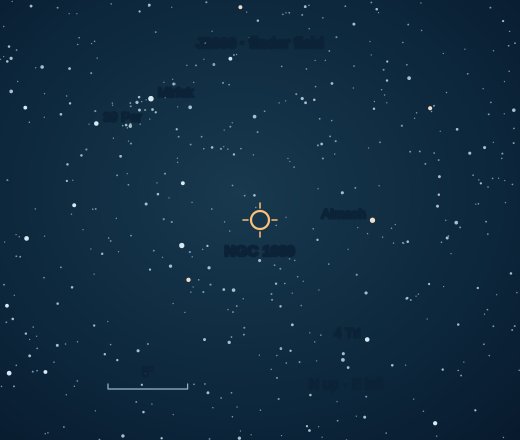
    On the north-up chart, start at Algol. The target lies about 5.2° west of it. Match the surrounding stars before changing magnification.

  3. Check the identification

    The catalogued long axis is 22.5 arcminutes. Keep a few field stars beyond the cluster in the eyepiece. Compare the density in the middle with the density near the edge.

Best telescope for viewing NGC 1039: Celestron StarSense Explorer DX 102AZ refractor — to keep the central concentration and outliers in one view. on Amazon

A closer look at NGC 1039

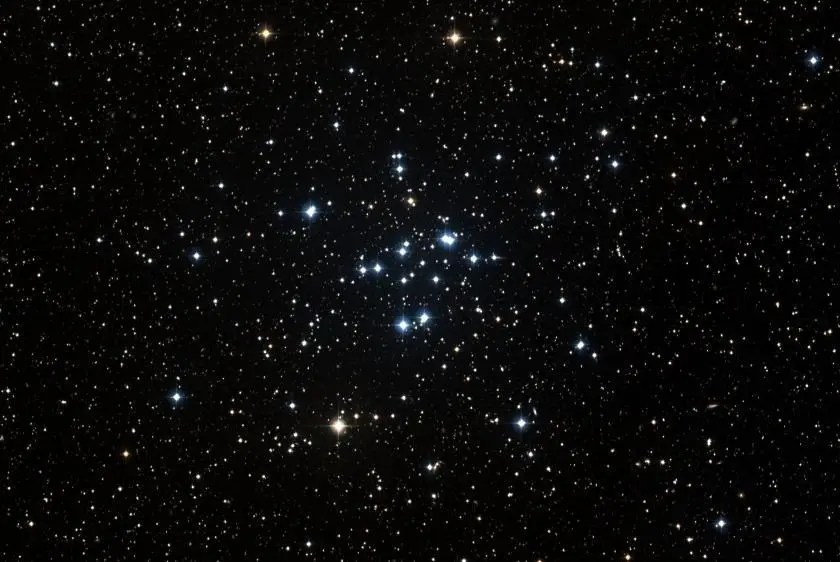
Messier 34 is one of the most satisfying binocular clusters in Perseus. Several bright pairs and small groups break up its broad scattering of stars.

Sketch the brightest pairs at low power and compare the gaps between them. They form a more distinctive pattern than a simple circular outline.

Use Algol to orient your finder. The target is about 5.2° to its west on the celestial sphere. Allow for a catalogue size of 22.5′ across when choosing the eyepiece field.