

LIBRE TELESCOPE
Menu
Book Event

Sky Guide

Lutetia

Quick Stats

Name:
Lutetia
Type:
Object
Observability:
Intermediate
Best telescope for viewing:
Sky-Watcher Classic 200P 8-inch Dobsonian — to distinguish Lutetia’s motion in a comparison of dated star fields.

How to view Lutetia

  1. Select a dated position

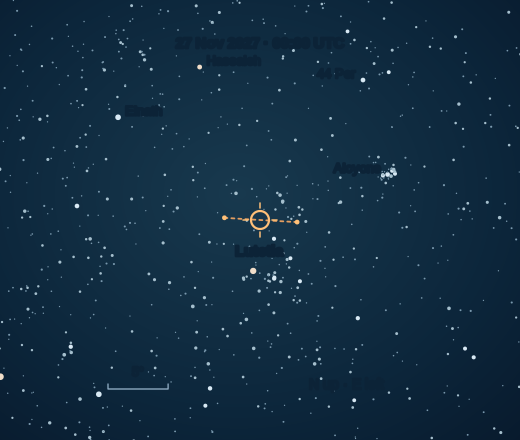
    Try November 28–December 8, 2027. In JPL Horizons, select your West Coast observing site and use local twilight to choose an observing time for Lutetia.

  2. Photograph the field

    Center the predicted position of Lutetia on the first night. Save a second image of the same stars at another time, with the date and time recorded for each.

  3. Confirm the shift

    Align the stars in the two images and look for a point that moves in the predicted direction. Stars align when the frames are registered, while the asteroid changes place.

Best telescope for viewing Lutetia: Sky-Watcher Classic 200P 8-inch Dobsonian — to distinguish Lutetia’s motion in a comparison of dated star fields. on Amazon

A closer look at Lutetia

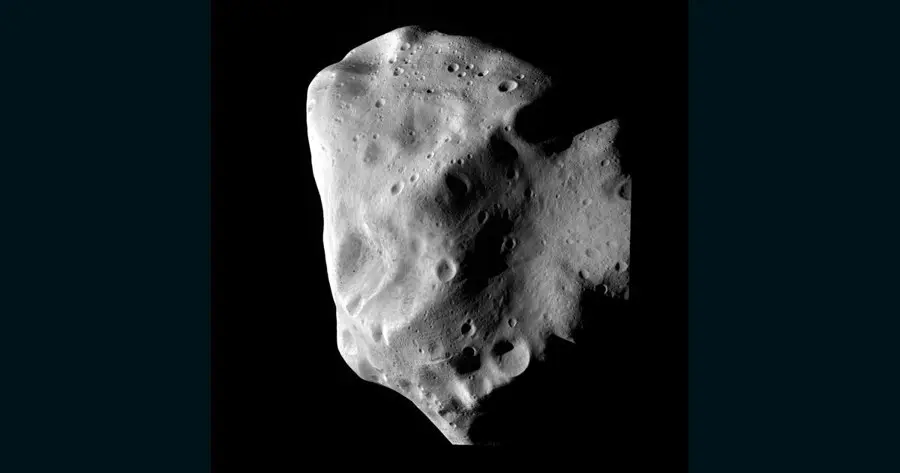
Rosetta flew past Lutetia on its way to a comet. The spacecraft recorded a rugged, cratered landscape on a sizable main-belt asteroid that normally appears as a moving point.

Lutetia is roughly 100 km across. Rosetta’s July 2010 flyby revealed large craters, grooves and landslides that a ground-based view of this distant point of light cannot distinguish.

Use a predicted position and repeat the image on another night. Stars align when the frames are registered, while the asteroid changes place. The angular size of a distant body determines how much of its surface a telescope can resolve. Two surface markings can blend together when their separation falls below a telescope’s angular resolution.