

A closer look at LHS 3844 b
Infrared observations have followed the changing heat output of this small, very close-in planet through its orbit. The strong contrast between hemispheres constrains how much heat is redistributed.
The catalogue gives an orbital period of 0.463 days. A transit lasts about 0.52 hours and lowers the star’s measured light by roughly 0.07%. A stable comparison star helps separate that dip from changes in the sky.
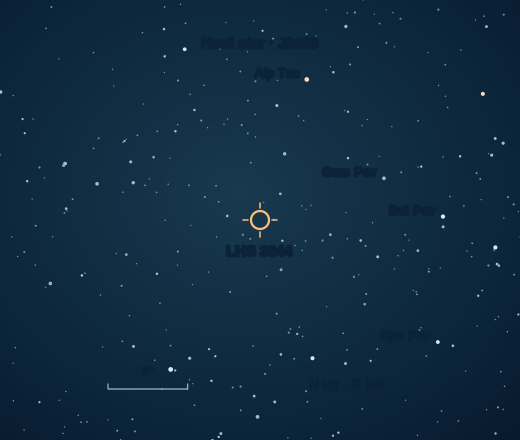
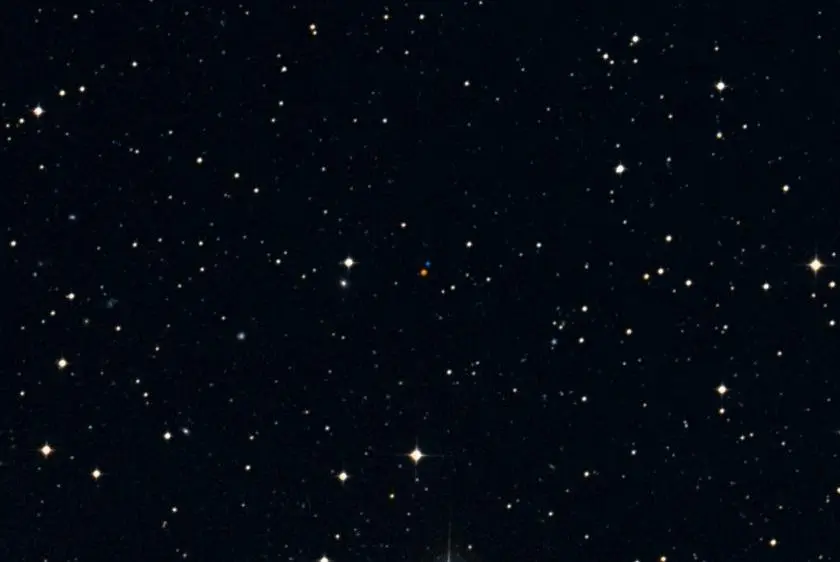
A thermal phase curve observes the system even when a transit is over. It can distinguish patterns of heating that a single dip in visible light cannot. On a wide-field chart, NGC 7329 in Tucana lies about 2.7° from this target. Observations of exoplanets often measure changes in the host star’s light.
Want to learn more about LHS 3844 b? LHS 3844 b on Wikipedia.