

LIBRE TELESCOPE
Menu
Book Event

Sky Guide

Kepler-90 i

Quick Stats

Name:
Kepler-90 i
Type:
Object
Observability:
Expert
Best telescope for viewing:
Space-based photometry or equivalent research data for the very shallow transit. Use the published light curve.

How to view Kepler-90 i

  1. Plan around meridian passage

    Try July 31–August 4, 2027. At its highest the field is about 75° above the horizon in Los Angeles and 88° in Seattle. Use your city’s meridian time for the best view.

  2. Identify the host star

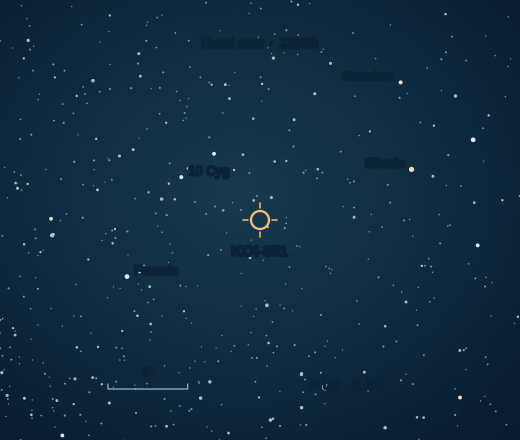
    On the north-up chart, start at Fawaris. The target lies about 9.0° northwest of it. Match the surrounding stars before changing magnification. The point to identify is KOI-351, listed at visual magnitude 13.9.

  3. Inspect the transit light curve

    Open the archived observations of this host. Normalize the brightness outside transit and compare repeated dips at the published orbital period.

A closer look at Kepler-90 i

A machine-learning search helped astronomers find the weak transit signal of Kepler-90 i in archived spacecraft data. It belongs to a notably crowded planetary system.

The system is about 2,767 light-years away, and the catalogue gives an orbital period of roughly 14.4 days. The host has visual magnitude 13.88, which sets the scale of the starlight an observer must contend with.

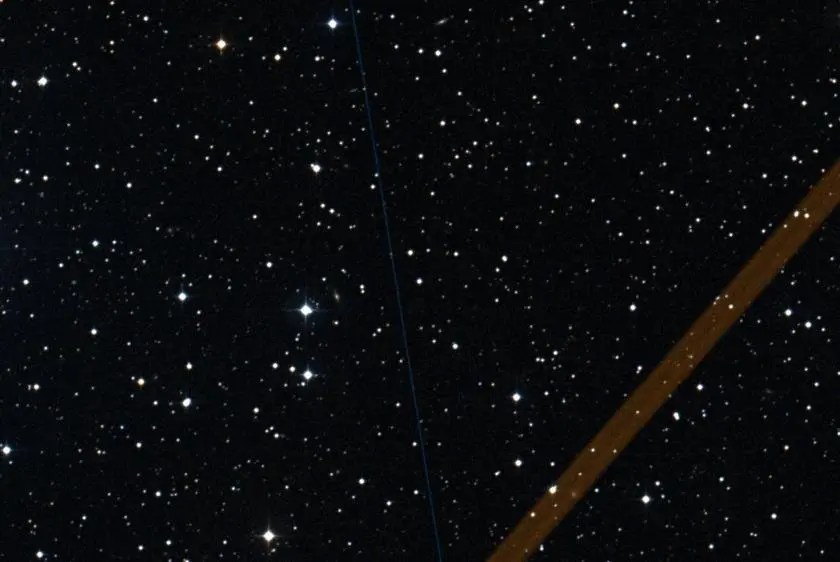
The light curve illustrates the value of returning to an old data set with a new method. The stellar field itself gives no visual hint of the planet.