

A closer look at Kepler-186 f
This roughly Earth-sized planet completes a much longer orbit than its four inner neighbors. Its discovery extended small-planet detections into a temperate part of a red dwarf’s system.
The catalogue gives an orbital period of 130 days. A transit lasts about 5.6 hours and lowers the star’s measured light by roughly 0.047%. A stable comparison star helps separate that dip from changes in the sky.
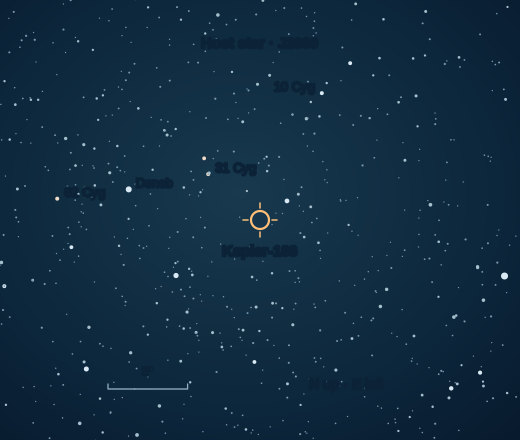
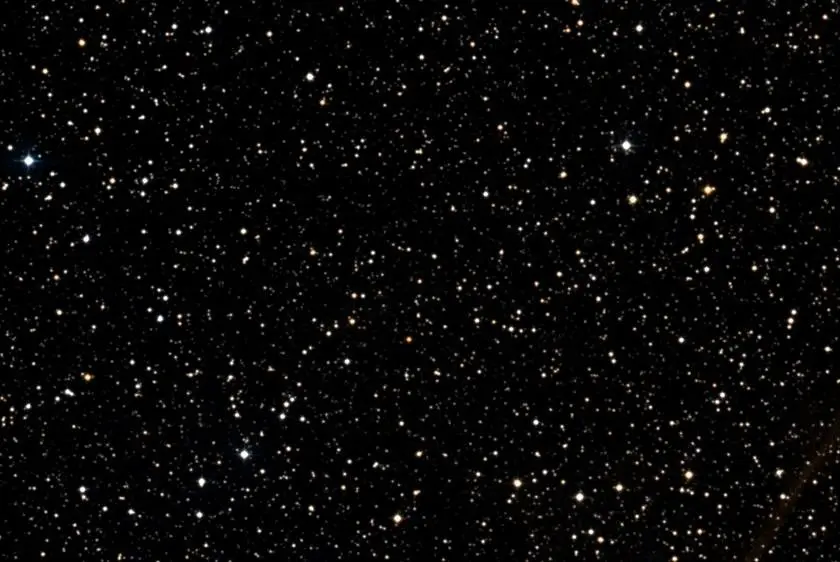
The star is faint and the dip is tiny. The Kepler light curve is the practical way to explore the signal, while the finder image identifies the direction.
NASA · planet archive · Host star on Wikipedia: Kepler-186 · Identifiers and catalog cross-references
Want to learn more about Kepler-186 f? Kepler-186f on Wikipedia.