

A closer look at Kepler-11 e
Kepler-11 contains a compact group of transiting planets whose orbital planes line up from Earth. Planet e is one of the bodies whose gravity perturbs the timing of neighboring transits.
The catalogue gives an orbital period of 32 days. A transit lasts about 4.2 hours and lowers the star’s measured light by roughly 0.13%. A stable comparison star helps separate that dip from changes in the sky.
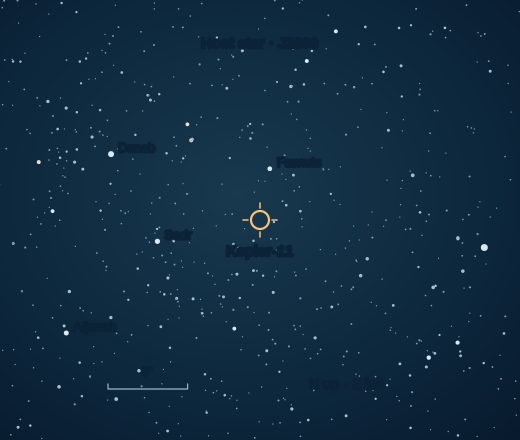
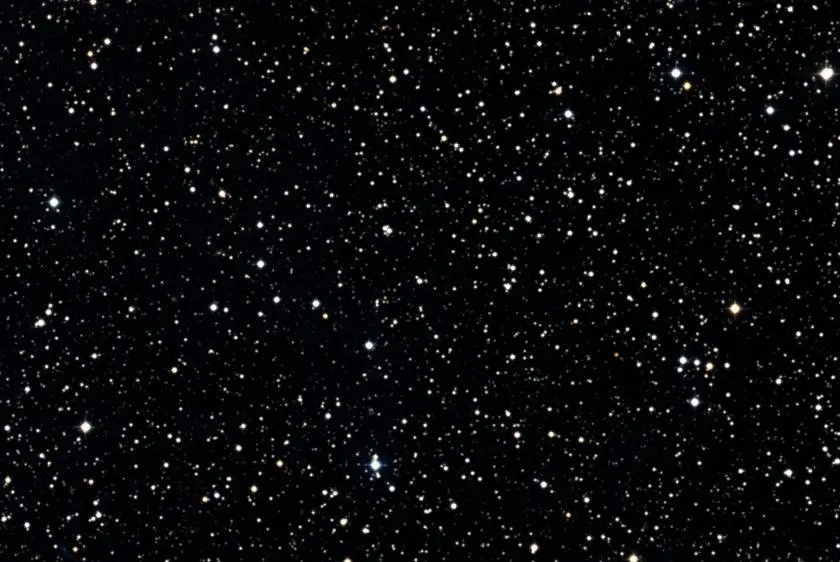
Compare the measured crossing times with a perfectly regular schedule. Small deviations reveal planets interacting across the system. On a wide-field chart, The Foxhead Cluster lies about 2.2° from this target. Observations of exoplanets often measure changes in the host star’s light.
NASA · planet archive · Host star on Wikipedia: Kepler-11 · Identifiers and catalog cross-references
Want to learn more about Kepler-11 e? Kepler-11e on Wikipedia.