

LIBRE TELESCOPE
Menu
Book Event

Sky Guide

Jupiter

Quick Stats

Name:
Jupiter
Type:
Object
Observability:
Naked eye
Best telescope for viewing:
Celestron NexStar 127SLT Maksutov — for the cloud belts and changing arrangement of the Galilean moons.

How to view Jupiter

  1. Check the evening sky

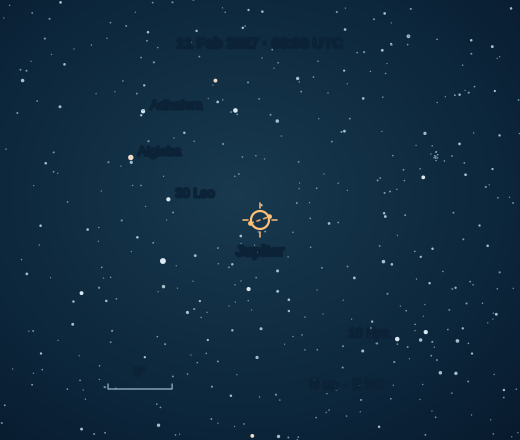
    Try February 4–18, 2027. Use your West Coast city and Pacific local time to find when Jupiter reaches its greatest altitude in darkness.

  2. Center the planet

    Use a chart for that date to match Jupiter to the surrounding stars. Start at your lowest power and focus on the edge of the disk.

  3. Inspect the disk

    Draw their positions and return another night to see which have traded places.

Best telescope for viewing Jupiter: Celestron NexStar 127SLT Maksutov — for the cloud belts and changing arrangement of the Galilean moons. on Amazon

A closer look at Jupiter

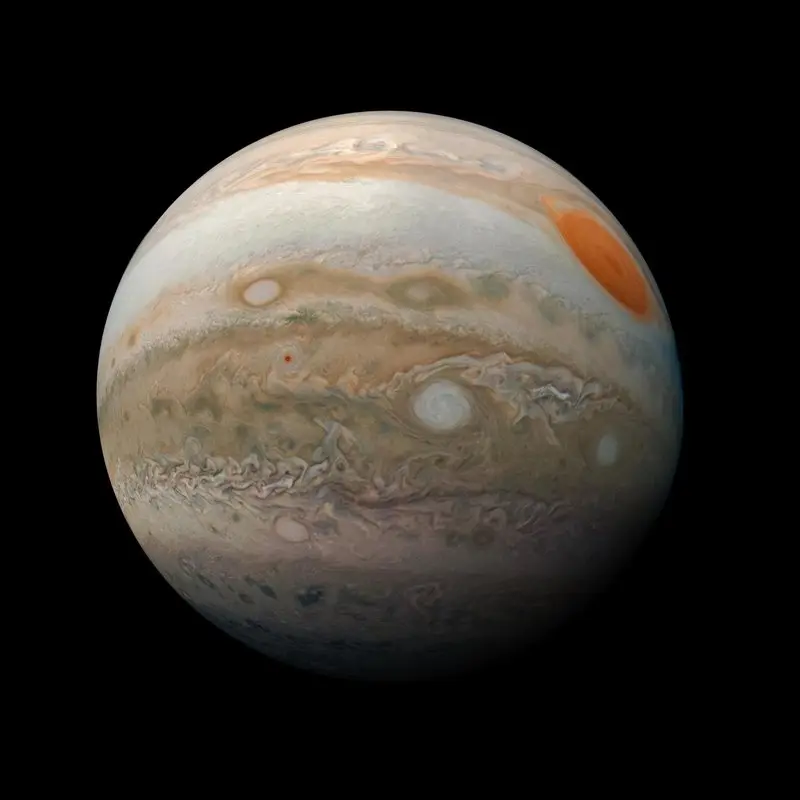
Jupiter is easy to mistake for a brilliant star until a telescope turns it into a striped disk.

Its light and dark bands are neighboring belts of moving clouds. The Great Red Spot is a storm embedded in that atmosphere.

Look for moons on either side of the planet. Draw their positions and return another night to see which have traded places. The angular size of a distant body determines how much of its surface a telescope can resolve. Two surface markings can blend together when their separation falls below a telescope’s angular resolution.

Want to learn more about Jupiter? Jupiter on Wikipedia.