

LIBRE TELESCOPE
Menu
Book Event

Sky Guide

The June solstice

Quick Stats

Name:
The June solstice
Type:
Event
Observability:
Naked eye
Rarity:
Very common · Once each June
Date of last occurrence:
Jun 21, 2026
Date of next occurrence:
Jun 21, 2027
Date of occurrence after that:
Jun 20, 2028
Best telescope for viewing:
Observe without optics. A vertical stick and a fixed mark on level ground let you compare the Sun’s shadow.

Solstice · UT · Calendar reference: November 28, 2026.

How to view The June solstice

  1. Set a local reference

    Try June 19–23, 2027. Set a vertical stick in a level spot with an unobstructed sky.

  2. Measure without looking at the Sun

    Near local solar noon, mark the end of the shadow several times. The shortest shadow gives the noon length, which can fall well away from 12:00 on the clock.

  3. Compare neighboring days

    Repeat at the same spot across several days. Around the solstice, the change in noon shadow length slows as it reaches an extreme.

A closer look at The June solstice

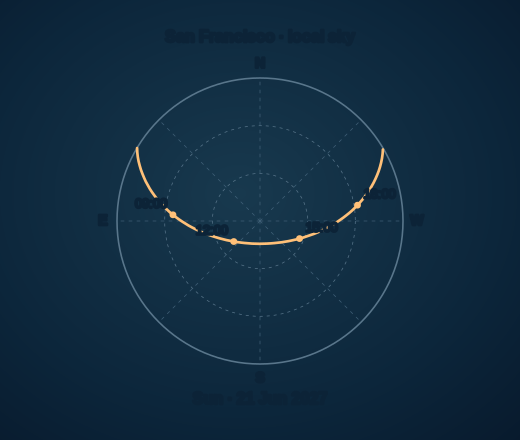
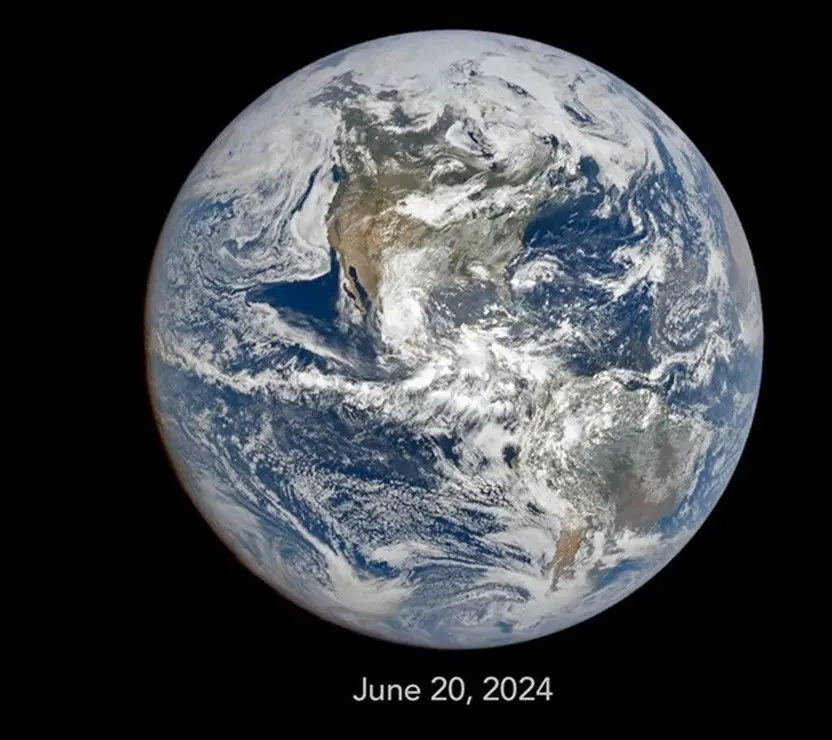
In June, the north end of Earth’s spin axis leans most strongly toward the Sun. The Sun reaches its northernmost declination, bringing the longest northern daylight and shortest southern daylight of the year.

At the Arctic Circle the Sun can skim the horizon around midnight. South of the equator the same geometry produces low midday sunlight, and much of Antarctica experiences polar night.

Mark the tip of a straight stick’s shadow at local solar noon from a fixed spot. Near the solstice it changes slowly, so including observations several weeks apart makes the seasonal turn easier to measure.