

LIBRE TELESCOPE
Menu
Book Event

Sky Guide

Humboldt Crater

Quick Stats

Name:
Humboldt Crater
Type:
Object
Observability:
Difficult
Best telescope for viewing:
Sky-Watcher Classic 200P 8-inch Dobsonian — for fine lunar relief in steady air and low-angle sunlight.

How to view Humboldt Crater

  1. Choose the illumination

    Select a night when libration turns the eastern limb toward Earth. Check local moonrise and illumination. Pick a time when the Moon is well above the horizon in your city.

  2. Locate the feature

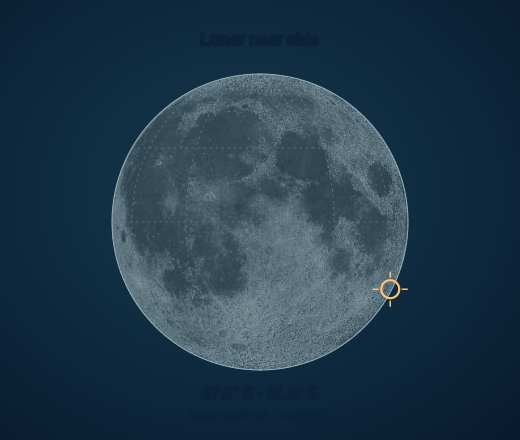
    On a lunar atlas, mark 27.0° S / 81.0° E. Orient the lunar disk in the finder, then move from the nearest broad dark plain or bright crater to Humboldt Crater.

  3. Study the detail

    The central features and floor fractures are more challenging than simply locating the crater.

Best telescope for viewing Humboldt Crater: Sky-Watcher Classic 200P 8-inch Dobsonian — for fine lunar relief in steady air and low-angle sunlight. on Amazon

A closer look at Humboldt Crater

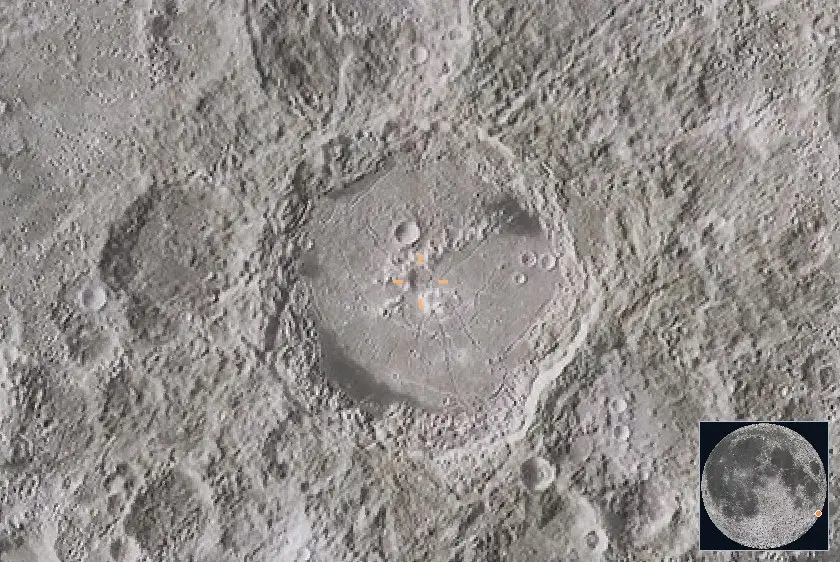
Huge Humboldt crater lies near the southeastern limb. Its fractured floor records later change inside an already ancient impact structure.

On a north-up lunar map, the center of Phillips lies about 144 km west of this feature. The crater measures about 199 km across.

Favor southeastern libration and begin with the outer outline. The central features and floor fractures are more challenging than simply locating the crater. Low sunlight near the lunar terminator makes shallow ridges and crater walls cast long shadows. The guide to impact craters explains how an impact excavates a cavity and throws debris beyond its rim.