

LIBRE TELESCOPE
Menu
Book Event

Sky Guide

Hubble’s Variable Nebula

NGC 2261

Quick Stats

Name:
Hubble’s Variable Nebula (NGC 2261)
Type:
Object
Observability:
Difficult
Best telescope for viewing:
Sky-Watcher Classic 250P 10-inch Dobsonian — for broadband reflected starlight under a dark sky. Use a low-power eyepiece.

How to view NGC 2261

  1. Plan around meridian passage

    Try February 4–8, 2027. At its highest the field is about 65° above the horizon in Los Angeles and 51° in Seattle. Use your city’s meridian time for the best view.

  2. Find the field

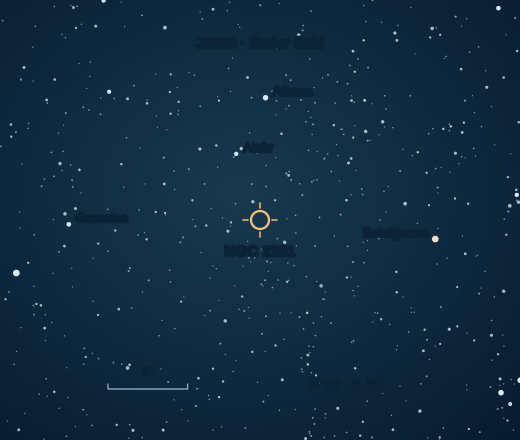
    On the north-up chart, start at Alhena. The target lies about 7.7° south of it. Match the surrounding stars before changing magnification.

  3. Check the identification

    The catalogued long axis is 2 arcminutes. Look to both sides of the illuminating star. Compare the haze there with the halo of another star of similar brightness.

Best telescope for viewing NGC 2261: Sky-Watcher Classic 250P 10-inch Dobsonian — for broadband reflected starlight under a dark sky. Use a low-power eyepiece. on Amazon

A closer look at NGC 2261

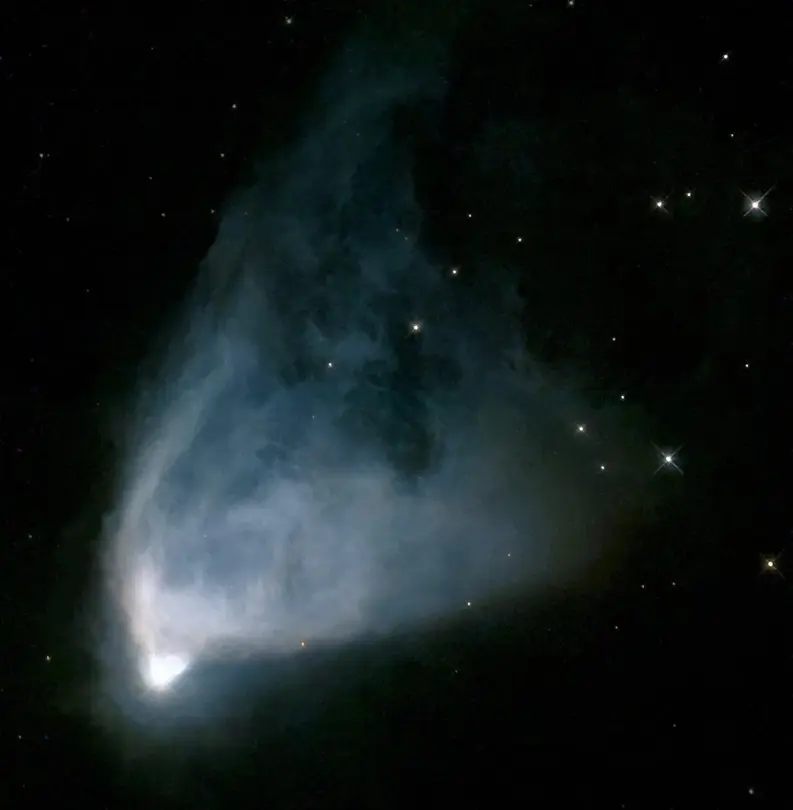
R Monocerotis illuminates a fan-shaped cloud called Hubble’s Variable Nebula. Shadows cast onto the cloud can change its apparent pattern on a human timescale.

Record the direction and extent of the fan. A dated series of sketches or images is more informative than a single impression.

Begin your chart search at Alzirr, then move about 4.4° south to the target field. The catalogue gives an apparent size of 2.0′ × 1.0′. On a wide-field chart, NGC 2251 in Monoceros lies about 1.2° from this target. Use an eyepiece with a wide field of view to match the surrounding pattern of stars to the finder chart.

Want to learn more about Hubble’s Variable Nebula? NGC 2261 on Wikipedia.