

LIBRE TELESCOPE
Menu
Book Event

Sky Guide

The Hercules Globular Cluster

M13

Quick Stats

Name:
The Hercules Globular Cluster (M13)
Type:
Object
Observability:
Easy
Best telescope for viewing:
Sky-Watcher Classic 200P 8-inch Dobsonian — to pick out outer stars and compare them with the unresolved core.

How to view M13

  1. Plan around meridian passage

    Try July 2–6, 2027. At its highest the field is about 88° above the horizon in Los Angeles and 79° in Seattle. Use your city’s meridian time for the best view.

  2. Find the field

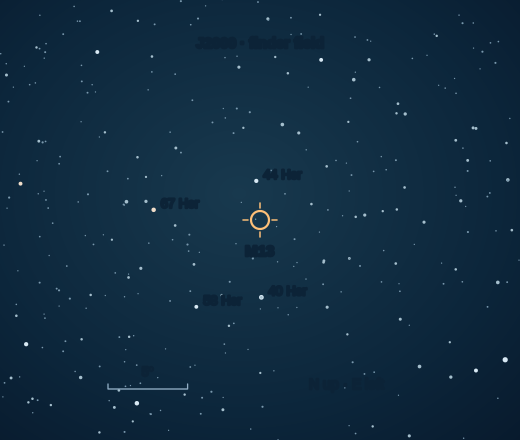
    On the north-up chart, start at Sarin. The target lies about 13.7° northwest of it. Match the surrounding stars before changing magnification.

  3. Check the identification

    The catalogued long axis is 16.5 arcminutes. Increase the power in small steps and watch for outer stars separating from the smoother central glow.

Best telescope for viewing M13: Sky-Watcher Classic 200P 8-inch Dobsonian — to pick out outer stars and compare them with the unresolved core. on Amazon

A closer look at M13

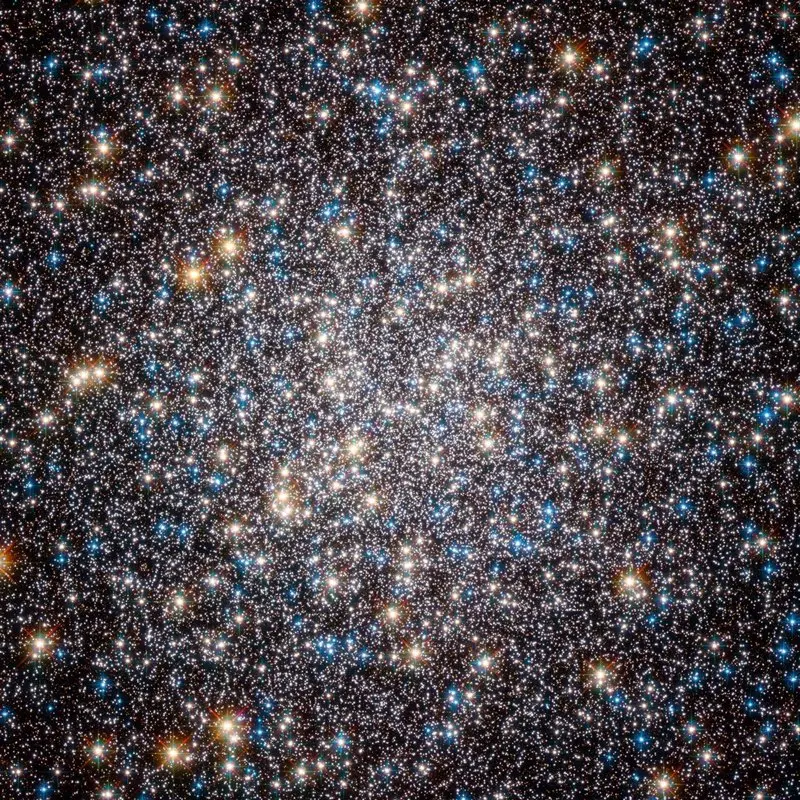
M13 lies along one side of the Keystone, the four-star figure at the heart of Hercules. Binoculars reveal a small ball of light.

Its dense appearance comes from well over a hundred thousand stars. Edmond Halley noted the cluster in the early eighteenth century.

Use the Keystone as your locator. A larger telescope under good skies can resolve stars in the outer halo where binoculars show only a glow.

Want to learn more about the Hercules Globular Cluster? Messier 13 on Wikipedia.