

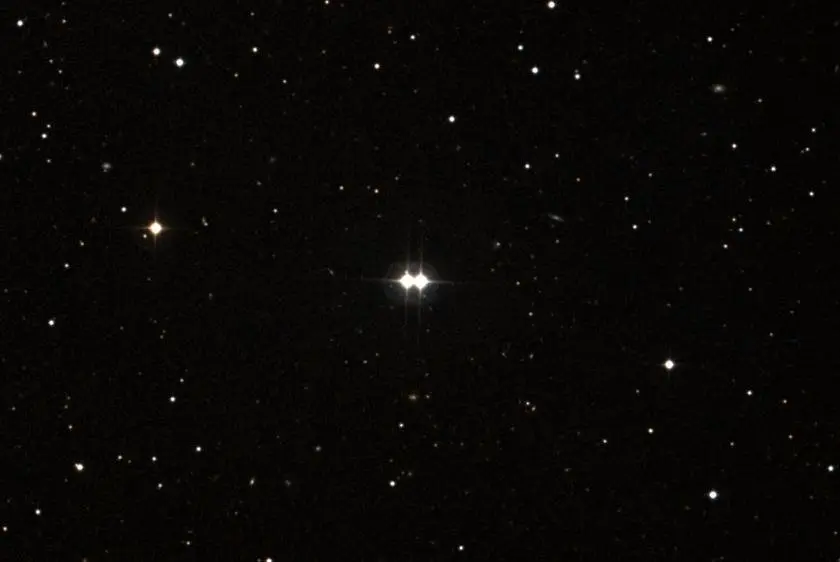
A closer look at HD 80606 b
This giant travels on an exceptionally eccentric orbit. Near closest approach to its star, the intense change in heating unfolds much faster than its long orbital period suggests.
The catalogue gives an orbital period of 111 days. A transit lasts about 12 hours and lowers the star’s measured light by roughly 1%. A stable comparison star helps separate that dip from changes in the sky.
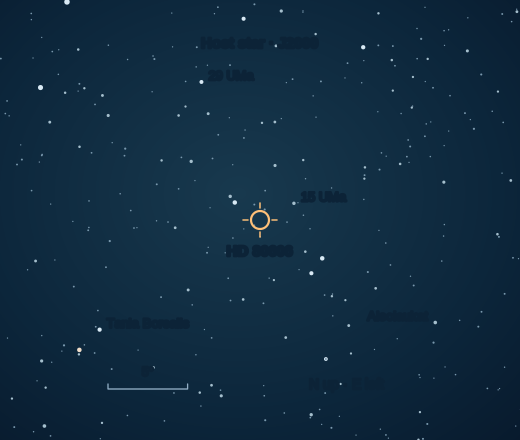
Its rare, lengthy transits reward coordinated observations from different longitudes. A short nightly run may capture only part of a single crossing. On a wide-field chart, The Helix Galaxy lies about 9.0° from this target. Observations of exoplanets often measure changes in the host star’s light.
NASA · planet archive · Host star on Wikipedia: HD 80606 and HD 80607 · Identifiers and catalog cross-references
Want to learn more about HD 80606 b? HD 80606 b on Wikipedia.