


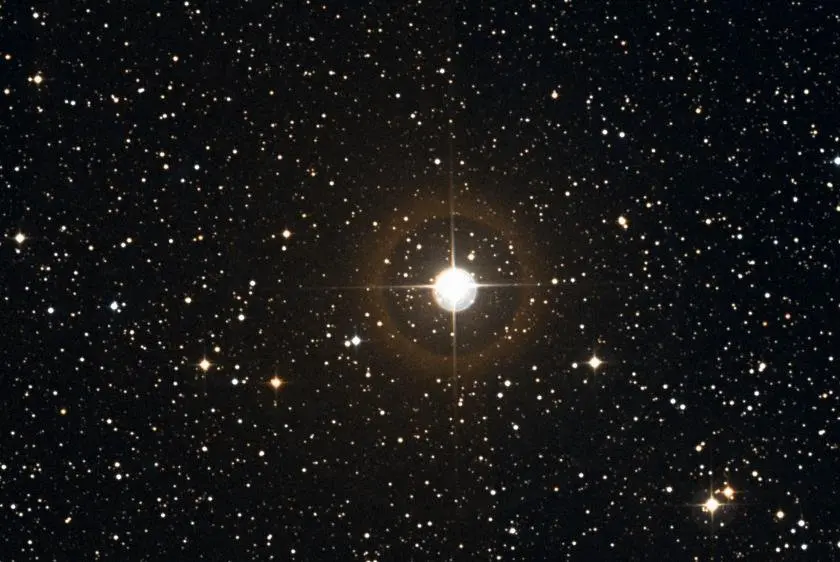
A closer look at HD 219134 b
A bright nearby star hosts this short-period rocky world. Velocity measurements revealed the planet, and infrared observations subsequently caught it crossing the stellar disk.
The catalogue gives an orbital period of 3.09 days. A transit lasts about 0.93 hours and lowers the star’s measured light by roughly 0.025%. A stable comparison star helps separate that dip from changes in the sky.
Its bright host provides a surprisingly accessible sky target. The shallow transit itself takes precise measurements and careful control of systematic errors. On a wide-field chart, The Wizard Nebula lies about 3.6° from this target. Observations of exoplanets often measure changes in the host star’s light.
NASA · planet archive · Host star on Wikipedia: HD 219134 · Identifiers and catalog cross-references
Want to learn more about HD 219134 b? HD 219134 b on Wikipedia.