

LIBRE TELESCOPE
Menu
Book Event

Sky Guide

The Fireworks Galaxy

NGC 6946

Quick Stats

Name:
The Fireworks Galaxy (NGC 6946)
Type:
Object
Observability:
Difficult
Best telescope for viewing:
Sky-Watcher Classic 250P 10-inch Dobsonian — for the faint central condensation and the brighter part of the disk.

How to view NGC 6946

  1. Plan around meridian passage

    Try August 29–September 2, 2027. At its highest the field is about 64° above the horizon in Los Angeles and 77° in Seattle. Use your city’s meridian time for the best view.

  2. Find the field

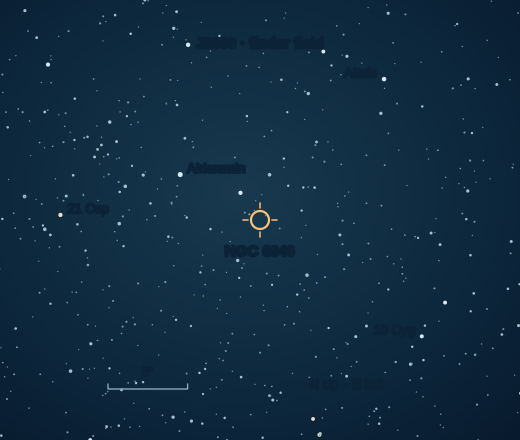
    On the north-up chart, start at Alderamin. The target lies about 5.7° west of it. Match the surrounding stars before changing magnification.

  3. Check the identification

    The catalogued long axis is 11.4 arcminutes. Compare the central light with the field just outside it. Sketch the edge you can repeatedly recover with a side glance.

Best telescope for viewing NGC 6946: Sky-Watcher Classic 250P 10-inch Dobsonian — for the faint central condensation and the brighter part of the disk. on Amazon

A closer look at NGC 6946

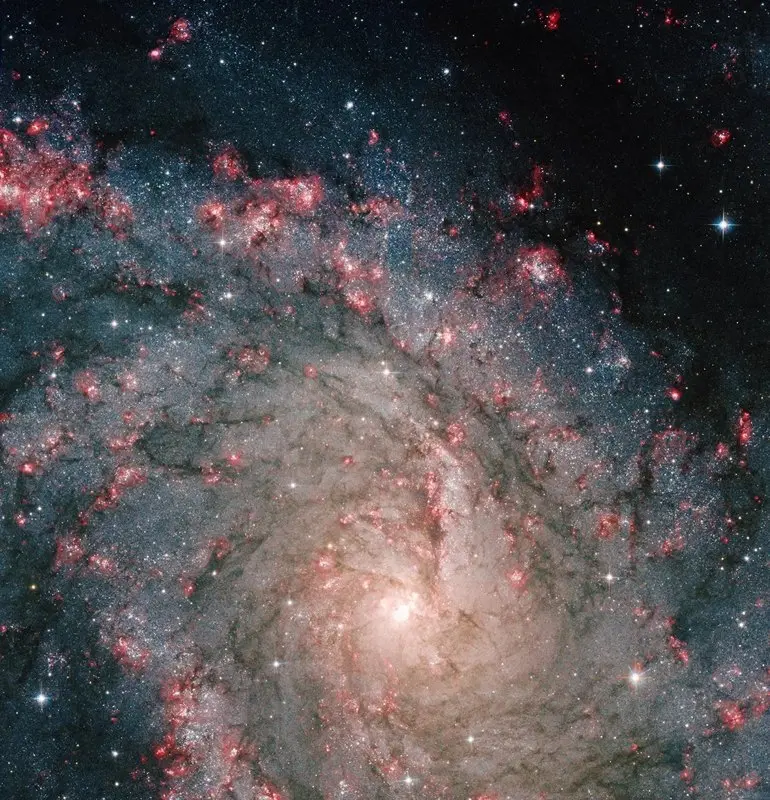
NGC 6946 lies near the border of Cygnus and Cepheus. Its nickname commemorates the many stellar explosions observers have recorded there.

Multiple supernovae have been seen in this one galaxy since 1917. Their appearance changes the otherwise familiar pattern of foreground stars and galactic light.

Try to detect the broad disk on a transparent night. Comparing dated photographs is the better way to search for a newly appearing point. On a wide-field chart, Alderamin lies about 5.7° from this target. Use an eyepiece with a wide field of view to match the surrounding pattern of stars to the finder chart.

Want to learn more about the Fireworks Galaxy? NGC 6946 on Wikipedia.