

LIBRE TELESCOPE
Menu
Book Event

Sky Guide

Earth at aphelion

Quick Stats

Name:
Earth at aphelion
Type:
Event
Observability:
Difficult
Rarity:
Very common · Once each year, in early July
Date of last occurrence:
Jul 6, 2026
Date of next occurrence:
Jul 5, 2027
Date of occurrence after that:
Jul 3, 2028
Best telescope for viewing:
Use calibrated full-disk solar archive images from the same instrument and image scale.

Maximum Earth–Sun distance · UT · Calendar reference: November 28, 2026.

How to view Earth at aphelion

  1. Select the two dates

    Compare July 5 with January 3, 2027. The comparison uses full-disk solar images available from the same archive anywhere on the West Coast.

  2. Fix the image scale

    Download images from the same instrument. Check the plate scale and any resizing so that the two solar disks are directly comparable.

  3. Measure across the limb

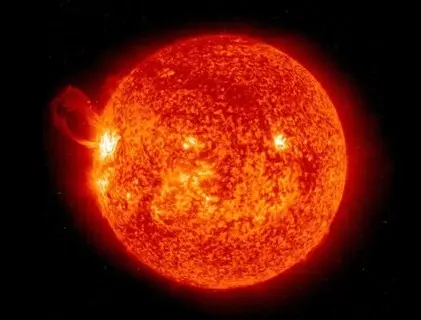
    Measure the diameter of each solar disk across several directions and average the results. The larger disk corresponds to the smaller Earth–Sun distance.

A closer look at Earth at aphelion

At aphelion, Earth reaches the farthest point of its orbit from the Sun. The event comes in northern summer because the seasons depend mainly on the tilt of Earth’s spin axis.

The Sun appears slightly smaller in July than it did in January. The difference in angular size follows directly from the changing Earth–Sun distance, even though the Sun’s physical diameter hardly changes.

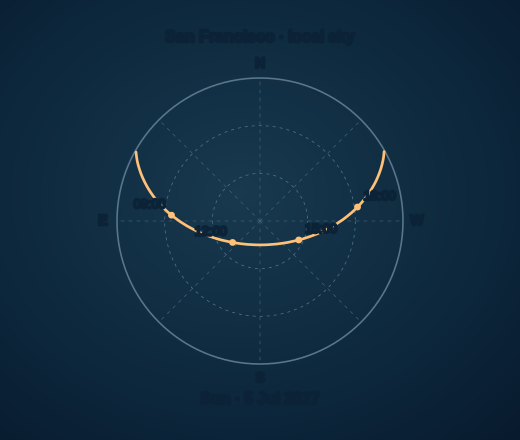
Use two full-disk solar images from the same instrument with the same scale. Overlay the outlines and check both edges. A bright active region can move across the disk without changing the diameter. A chart of the celestial sphere helps translate an event’s position into a direction from your observing site.

Want to learn more about Earth at aphelion? Apsis on Wikipedia.