

LIBRE TELESCOPE
Menu
Book Event

Sky Guide

The Double Cluster in Perseus

NGC 869

Quick Stats

Name:
The Double Cluster in Perseus (NGC 869)
Type:
Object
Observability:
Naked eye
Best telescope for viewing:
Sky-Watcher Heritage 130P tabletop reflector — to resolve the brighter members in the same field as the cluster’s outline.

How to view NGC 869

  1. Plan around meridian passage

    Try December 7–11, 2026. At its highest the field is about 67° above the horizon in Los Angeles and 81° in Seattle. Use your city’s meridian time for the best view.

  2. Find the field

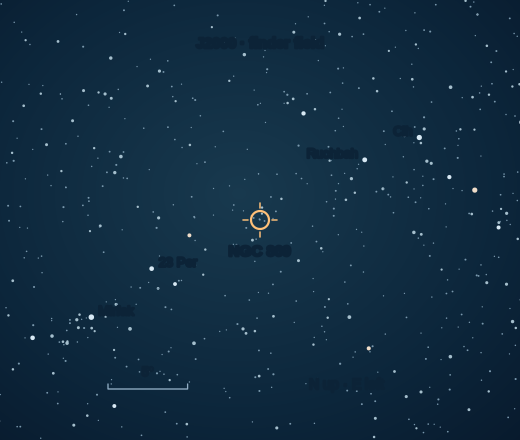
    On the north-up chart, start at Ruchbah. The target lies about 7.7° east of it. Match the surrounding stars before changing magnification.

  3. Check the identification

    The catalogued long axis is 14.4 arcminutes. Keep a few field stars beyond the cluster in the eyepiece. Compare the density in the middle with the density near the edge.

Best telescope for viewing NGC 869: Sky-Watcher Heritage 130P tabletop reflector — to resolve the brighter members in the same field as the cluster’s outline. on Amazon

A closer look at NGC 869

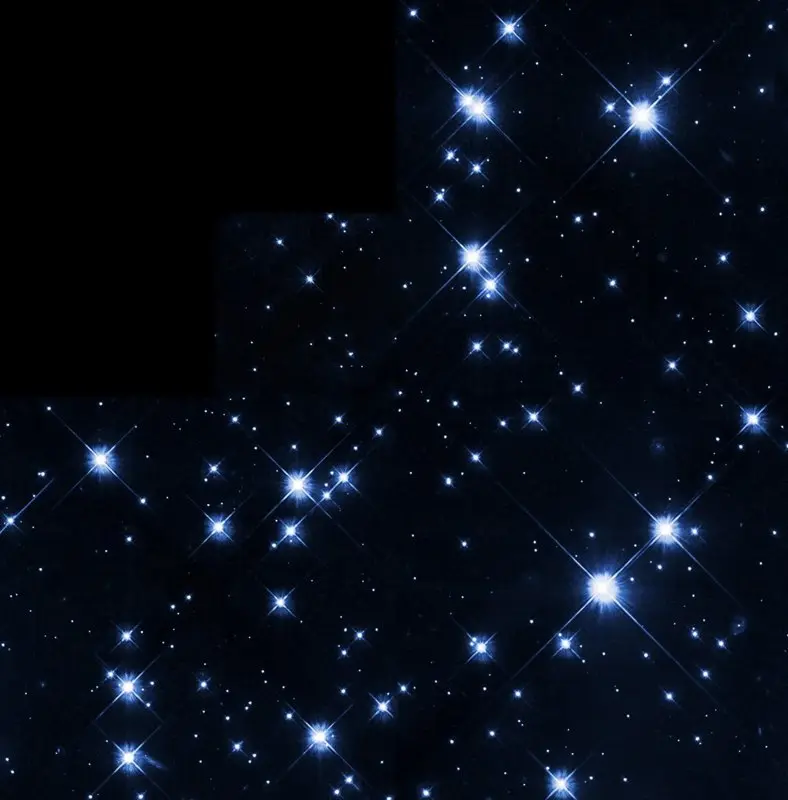
Two open clusters, NGC 869 and NGC 884, lie together in the northern Milky Way between Perseus and Cassiopeia.

Each bright knot is a separate family of stars. Their close apparent spacing makes them a rare opportunity to compare two rich clusters in a single field.

Try binoculars first. A wide-field telescope can keep both centers in view and show the spray of stars between them. On a wide-field chart, NGC 744 in Perseus lies about 3.4° from this target.

Want to learn more about the Double Cluster in Perseus? Double Cluster on Wikipedia.