

LIBRE TELESCOPE
Menu
Book Event

Sky Guide

Diphda

HIP 3419

Quick Stats

Name:
Diphda (HIP 3419)
Type:
Object
Observability:
Naked eye
Best telescope for viewing:
Use the naked eye for the named star. Binoculars can help identify it among the surrounding stars.

How to view HIP 3419

  1. Plan around meridian passage

    Try October 27–31, 2027. At its highest the field is about 38° above the horizon in Los Angeles and 24° in Seattle. Use your city’s meridian time for the best view.

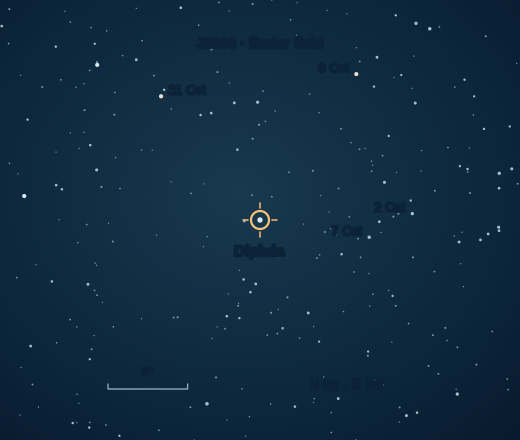
  2. Find the field

    On the north-up chart, start at Ankaa. The target lies about 24.6° north of it. Match the surrounding stars before changing magnification.

  3. What to look for

    A low, unobstructed horizon helps observers at more northerly latitudes.

A closer look at HIP 3419

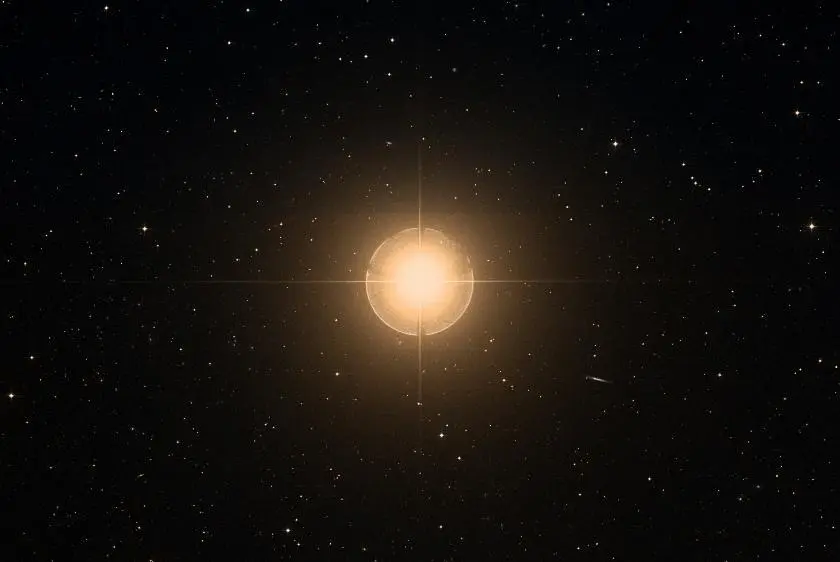
Diphda is the bright giant in the tail of Cetus. It stands out in an area where the large outlines of the sea constellations can be hard to follow.

Find Baten Kaitos on a north-up chart and move about 18.1° southwest to Diphda. Its visual magnitude of +2.04 makes it one of the brighter points in this part of Cetus.

Compare its warm color with Fomalhaut across the southern sky. A low, unobstructed horizon helps observers at more northerly latitudes.