

LIBRE TELESCOPE
Menu
Book Event

Sky Guide

The December solstice

Quick Stats

Name:
The December solstice
Type:
Event
Observability:
Naked eye
Rarity:
Very common · Every December
Date of last occurrence:
Dec 21, 2025
Date of next occurrence:
Dec 21, 2026
Date of occurrence after that:
Dec 22, 2027
Best telescope for viewing:
Observe without optics. A vertical stick and a fixed mark on level ground let you compare the Sun’s shadow.

Solstice instant · UT date · Calendar reference: November 28, 2026.

How to view The December solstice

  1. Set a local reference

    Try December 19–23, 2026. Set a vertical stick in a level spot with an unobstructed sky.

  2. Measure without looking at the Sun

    Near local solar noon, mark the end of the shadow several times. The shortest shadow gives the noon length, which can fall well away from 12:00 on the clock.

  3. Compare neighboring days

    Repeat at the same spot across several days. Around the solstice, the change in noon shadow length slows as it reaches an extreme.

A closer look at The December solstice

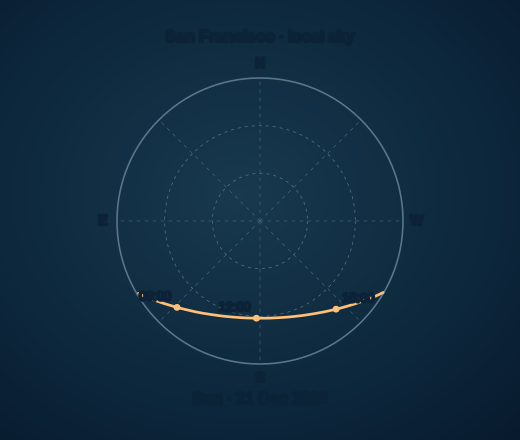
At the December solstice, the Sun reaches its most southerly point in Earth’s sky. Northern midlatitudes have their shortest daylight and southern midlatitudes their longest.

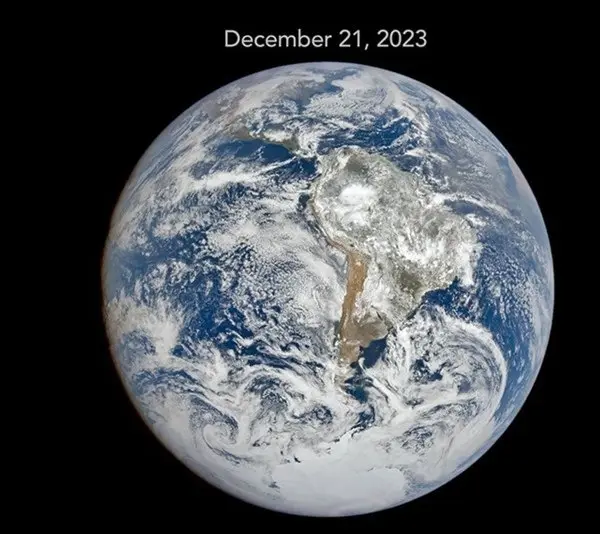
The difference comes from the tilt of Earth’s spin axis. At this time of year, Antarctica can receive sunlight all day while parts of the Arctic stay dark.

Place a vertical stick on level ground and mark its shadow near local solar noon. Repeat the measurement over the season to see how the height of the Sun changes.