

LIBRE TELESCOPE
Menu
Book Event

Sky Guide

The Crescent Nebula

NGC 6888

Quick Stats

Name:
The Crescent Nebula (NGC 6888)
Type:
Object
Observability:
Difficult
Best telescope for viewing:
Sky-Watcher Classic 250P 10-inch Dobsonian — for the faint bright–dark boundary under a transparent sky.

How to view NGC 6888

  1. Plan around meridian passage

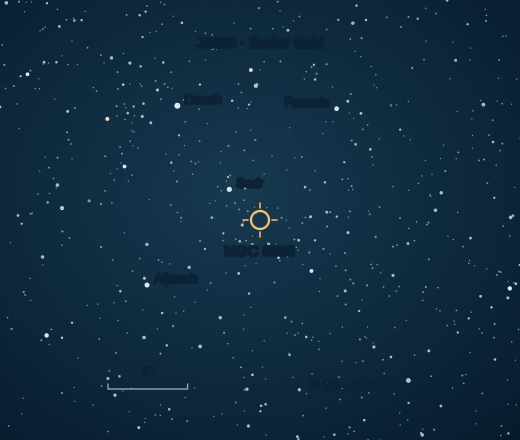
    Try August 29–September 2, 2027. At its highest the field is about 86° above the horizon in Los Angeles and 81° in Seattle. Use your city’s meridian time for the best view.

  2. Find the field

    On the north-up chart, start at Sadr. The target lies about 2.7° southwest of it. Match the surrounding stars before changing magnification.

  3. Check the identification

    The catalogued long axis is 20 arcminutes. Scan from the brightest patch into the adjacent sky, then reverse the sweep to check where the visible boundary falls.

Best telescope for viewing NGC 6888: Sky-Watcher Classic 250P 10-inch Dobsonian — for the faint bright–dark boundary under a transparent sky. on Amazon

A closer look at NGC 6888

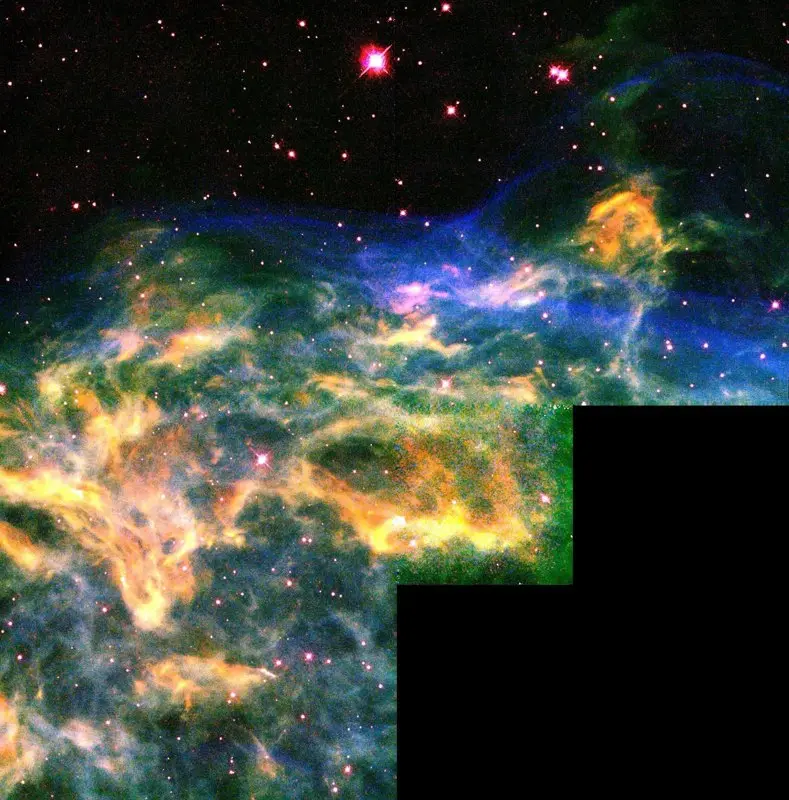
NGC 6888 in Cygnus is a curved shell surrounding a hot, massive Wolf–Rayet star.

A fast wind from the star has swept into material it lost earlier. Where the flows collide, the shell develops a network of bright filaments.

Under a dark sky, trace one segment of the crescent before trying to close the arc. A nebula filter can increase its contrast. On a wide-field chart, NGC 6881 in Cygnus lies about 1.0° from this target.

Want to learn more about the Crescent Nebula? Crescent Nebula on Wikipedia.