

LIBRE TELESCOPE
Menu
Book Event

Sky Guide

The Cosmic Bat Nebula

NGC 1788

Quick Stats

Name:
The Cosmic Bat Nebula (NGC 1788)
Type:
Object
Observability:
Intermediate
Best telescope for viewing:
Sky-Watcher Classic 200P 8-inch Dobsonian — for broadband reflected starlight under a dark sky. Use a low-power eyepiece.

How to view NGC 1788

  1. Plan around meridian passage

    Try January 5–9, 2027. At its highest the field is about 53° above the horizon in Los Angeles and 39° in Seattle. Use your city’s meridian time for the best view.

  2. Find the field

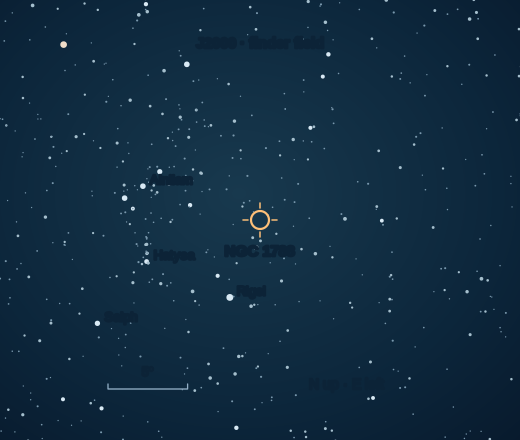
    On the north-up chart, start at Cursa. The target lies about 1.8° north of it. Match the surrounding stars before changing magnification.

  3. Check the identification

    The catalogued long axis is 2 arcminutes. Look to both sides of the illuminating star. Compare the haze there with the halo of another star of similar brightness.

Best telescope for viewing NGC 1788: Sky-Watcher Classic 200P 8-inch Dobsonian — for broadband reflected starlight under a dark sky. Use a low-power eyepiece. on Amazon

A closer look at NGC 1788

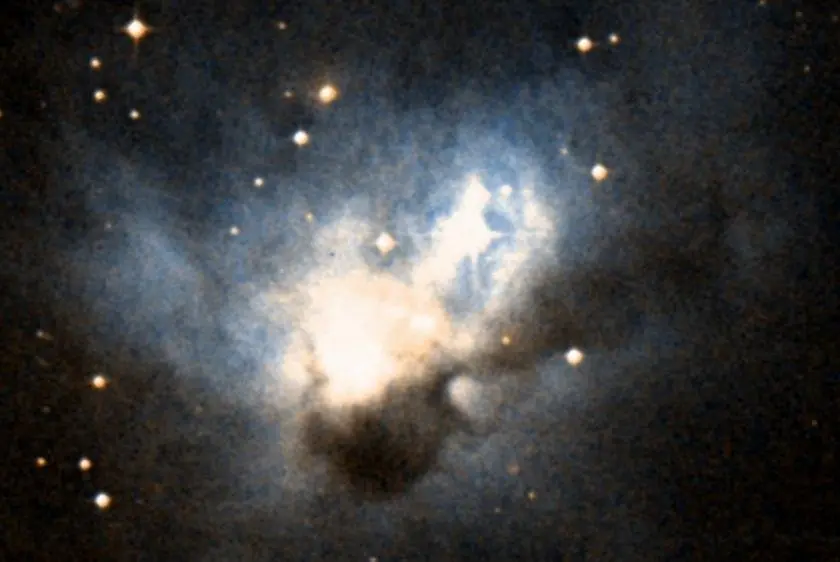
Nicknamed the Cosmic Bat, NGC 1788 lies away from Orion’s bright Sword. Dust around young stars reflects light, while darker material outlines the front of the cloud.

OpenNGC lists NGC 1788 at 2.0′ across. Use a dark, transparent sky. Broadband starlight reflected by dust responds differently from a hydrogen cloud when a narrow emission filter is inserted.

Mark Cursa in the finder. A sweep of about 1.8° north brings the catalogue position into the field. Use moderate power after finding the field and check the target against the nearest stellar points. On a wide-field chart, Rigel lies about 5.2° from this target.