

A closer look at Charon
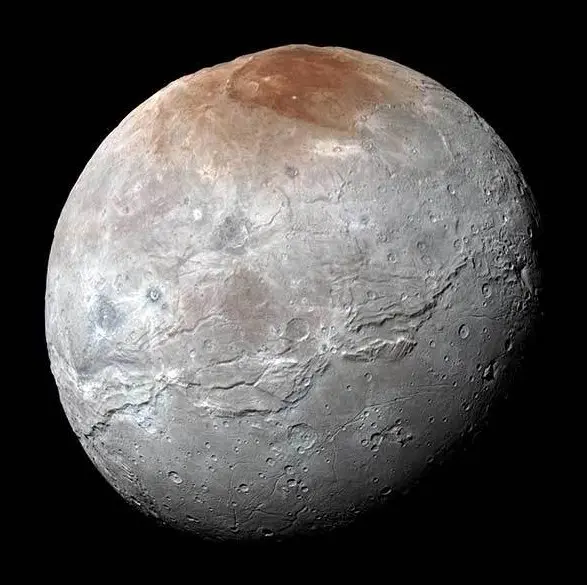
Pluto’s largest moon is so substantial relative to Pluto that the two orbit a point outside Pluto itself. New Horizons found a world of canyons and a noticeably dark polar region.
Charon is about 1,212 km across, roughly half Pluto’s diameter. The two rotate in step with their mutual orbit and continually present the same hemispheres to one another.
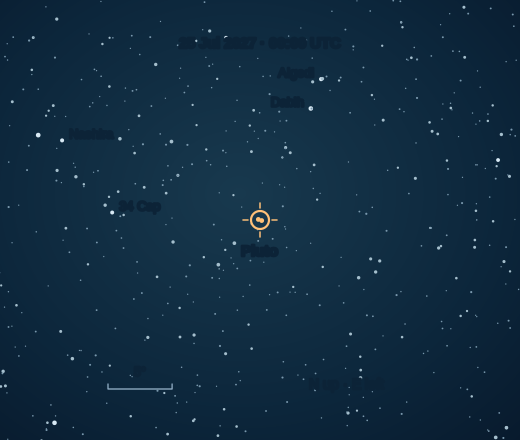
Resolving Charon separately from Pluto is a professional high-resolution challenge. Public images let observers study the surface after locating the combined system’s field. The angular size of a distant body determines how much of its surface a telescope can resolve.
Want to learn more about Charon? Charon (moon) on Wikipedia.