

A closer look at 55 Cancri e
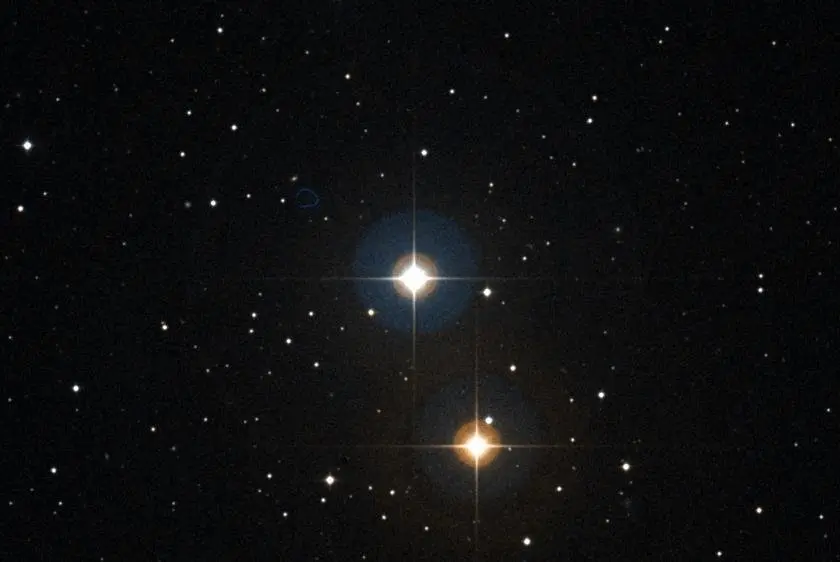
A rocky planet completes a year in less than an Earth day around the bright star 55 Cancri. Its illuminated hemisphere receives enough energy to heat exposed rock intensely.
The catalogue gives an orbital period of 0.737 days. A transit lasts about 1.5 hours and lowers the star’s measured light by roughly 0.038%. A stable comparison star helps separate that dip from changes in the sky.
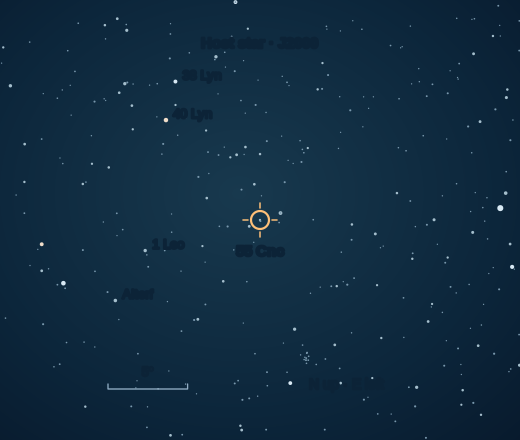
The host can be located with simple equipment. Measuring this small planet’s passage requires far greater precision than locating its star. On a wide-field chart, NGC 2608 in Cancer lies about 3.8° from this target. Observations of exoplanets often measure changes in the host star’s light.
NASA · planet archive · Host star on Wikipedia: 55 Cancri · Identifiers and catalog cross-references
Want to learn more about 55 Cancri e? 55 Cancri Ae on Wikipedia.