

A closer look at 47 Ursae Majoris b
47 Ursae Majoris b was an early example of a giant planet on a comparatively long orbit around a Sun-like star. It offered a contrast to the close-in giants in the first discovery announcements.
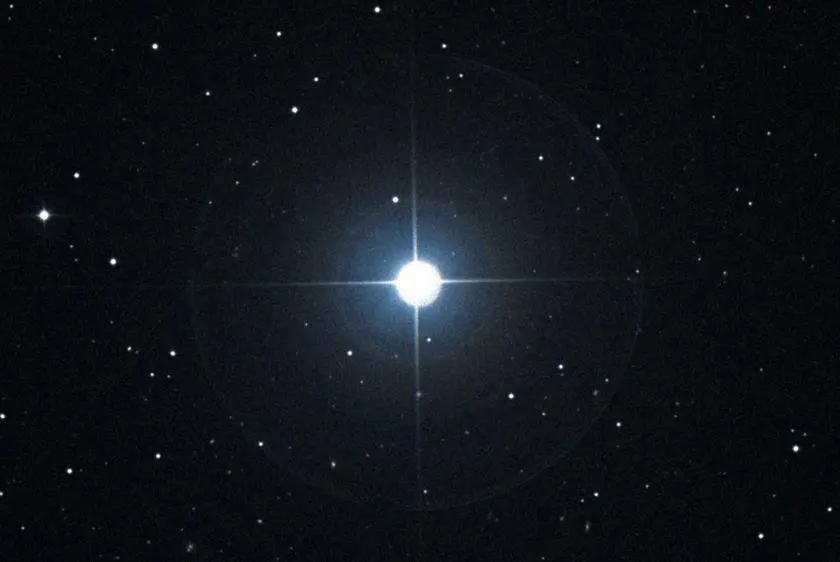
The system is about 45 light-years away, and the catalogue gives an orbital period of roughly 2.95 years. The host has visual magnitude 5.03, which sets the scale of the starlight an observer must contend with.
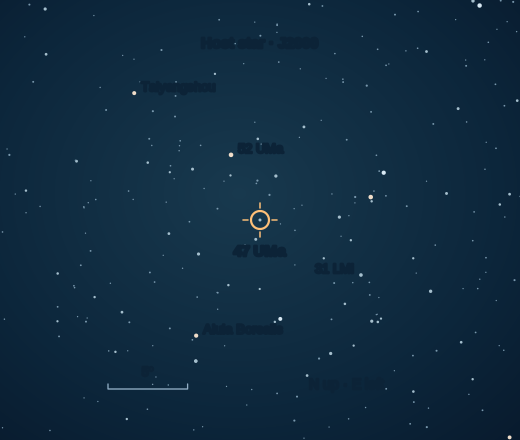
Locate the host in Ursa Major and inspect the published velocity curve. A planet on a multi-year orbit requires observations spanning multiple seasons.
NASA · planet archive · Host star on Wikipedia: 47 Ursae Majoris · Identifiers and catalog cross-references
Want to learn more about 47 Ursae Majoris b? 47 Ursae Majoris b on Wikipedia.